Getting Dumped

Sometimes, a business makes a conscious decision to dump a customer segment.  It just got dumped by VRBO.  I am not bitter.  They did a reasonable job of signaling their intentions and providing notice of their changes.  But I am not sure it makes sense.

My wife and I have been in the cottage rental business on Catawba Island Ohio since 1986.  In those early days, we advertised in area newspapers and all correspondence relied on the USPS.  All that was painful.  Then VRBO came along and was perfect.  Based on a flat annual subscription, they provided an advertising platform and purpose-built application for conveying property information, rates, availability, and responding to inquiries.  Templates helped with all the repeatable emails like “Your Money is Due” or “Thanks for Renting with Us”.

HomeAway acquired VRBO in 2006 and in a roll-up strategy of many vacation rental websites.  They created a dominant marketplace with shared rental listings.  As a paid subscriber, VRBO continued to get better under HomeAway and I grew more satisfied as they rolled out new features.

In 2015 Expedia acquired HomeAway/VRBO.  And things began to change.  Alas, they began making it a booking platform and not an advertising platform.  That is, they wanted to be like AirBnB.  Initially, VRBO offered an option to pay more for an annual subscription to bypass their requirement to book through them.  However, they optimized their search results based on listings where they were getting booking fees.  Some customers got frustrated.  But I was OK because I really wasn’t that dependent on their search results…renters looking for Gem Beach only have a few options.

In 2016 they added additional service fees to the traveler.  Now I was frustrated!  My prospects were frustrated.  So I began to look for other options.

Today, my contract with VRBO expired.  For the same cost as their old annual subscription, I have my own website – www.gembeachvacationhome.com – with all the same functionality that VRBO provided me.  I use a dedicated gmail account for all correspondence and can display my property availability using the gmail calendar.  Everything is functionally working the same although I know I will have a bit of work to overcome VRBO’s SEO prowess in search results.

See you later VRBO.  It was a nice ride.  As you can see, I am doing fine.  I hope your shift to become a booking platform works out for you.

The 3-Question Framework

As a board director, I use the “3-Question Framework” before, during, and after every board meeting.  And I advise CEO’s to use this framework as well as they prep for board meetings and steer their board discussion for optimal impact.

3-Question Framework…
  1. Do we have the right CEO?
  2. Do we have the right strategy?
  3. Do we have the right governance?
Consider this example.  A director was harping on the CEO about using a metric/KPI as part of their eCommerce initiative.  My assessment was that the director, based on the phrasing of the question, was behaving like the CEO’s operational adviser and not a director.  Specifically, the question was asked in this form…
  • Why don’t you use XYZ metric to measure our e-Commerce performance?
That form suggests the director is favorably predisposed to the XYZ metric and if the director were the CEO, that would be their choice.  A discussion involving two operators would be triggered during the board meeting while other board members tune out and check their phones.
Alternatively, a good director, in my opinion would rephrase as…
  • Why have you chosen to use ABC to measure e-Commerce performance, over XYZ or any other metric?

The rephrasing drives a higher order conversation which better informs each of the 3 questions in the framework…

  • can the CEO articulate a compelling answer or agree to revisit if there isn’t one?   That is, do we have the right CEO?
  • can the CEO articulate the metric’s link to overall strategy?  Or can the CEO contrast metrics that would be most important in alternative strategies?  That is, the CEO has thought about alternate strategies sufficiently.  And do we have the right strategy?
  • can the CEO describe the process that derives the data and its tie to standard reporting systems?  That is, do we have the right governance and oversight on processes and reporting?
There is a time and place for board directors to provide operating advise to CEOs.  But in board meetings proper, directors should be more thoughtful phrasing questions that will shine light on the “3-Question Framework”.

On my hate affair

A week ago, Open Text announced it was acquiring the Documentum business from Dell EMC (I’ll just refer to them by their old ticker symbol DCTM).  I’ve read most of the pundit opinions that have included descriptors like “graveyard”, “predictable”, “sad”, “smart move”, and more.

My hate affair with DCTM dates back over 20 years. In the early 1990’s while at Information Dimensions, we competed against DCTM around complex publishing applications based on SGML.  And speaking honestly, they beat us.  They kicked our ass.  I recall feeling a death nail reading that they hired Jay Leno to speak at their user conference.  They had achieved a level of scale we couldn’t duplicate without help.   My hate-o-meter redlined because they were that good.  So in 1998, Information Dimensions was acquired by Open Text.  That was a big deal at the time.  We brought forward years of experience and great enterprise customers.  Open Text brought forward a versatile collaboration and document management product.  We both believed in the web and SGML.  We both hated DCTM.

Upon arriving at Open Text in 1998, I was surprised that our product positioning could be summarized as “we’re different and unlike any other vendor”.   That meant publicly, we were in denial about competing with DCTM and consequently never used the term ECM.  Hating DCTM wasn’t nearly as much fun as before.  Time and change rolled forward and with that DCTM’s and Open Text’s products both converged.  Around 2002, Open Text joined the foray of squarely positioning itself in Enterprise Content Management (ECM) and the hate affair with DCTM was back on.  Rejoice!

In 2003, EMC came along and acquired DCTM with the promise of managing and archiving content using both hardware and software.  Open Text remained independent growing organically and by acquisition.   I’ll leave it to others to comment on how hard it must be to get hardware and software product and sales teams aligned.

Last week upon hearing the news of Open Text acquiring DCTM, I re-watched the movie Rush.  Its a must-see for anyone who cares about competitive strategy.  The two lead characters were bitter F1 drivers and had a hate affair for one another.  And it was that hate affair that made each of them great.

I am still an OTEX shareholder and cheer for their success from the sidelines everyday.  So to all my good friends still at OTEX, you now need to play nice with your DCTM brethren.  And just as importantly, launch a new hate affair with one competitor so you can continue being great.

Coming Up for Air in 2014

It is time to come up for air after having put my blog on sabbatical the last two years.  A sabbatical wasn’t really planned…it started out as a case of blogstipation which was followed by the all-consuming task of launching a new company RealWeld Systems, Inc.

Fast forward to today and I’m excited to join the board of Sitrion as the company executes on its multi-ecosystem strategy.  For over a decade while I was at Open Text, the company evolved from being entirely independent with no integration or major partnerships to having compelling integration and partnerships with SAP, Microsoft, and Oracle.   During that time, our sales and product evolved from the paraphrased positioning “we are the greatest” to “we are the greatest working with systems you’ve already bought”.

Creating win-win scenarios for the customer and partner, decision trade-offs on depth versus quantity of integration, and properly positioning added-value for all parties in a language familiar to the customer are just some of the strategic multi-ecosystem issues worth wrestling about.

In 2014, I will spend most of my time continuing to grow RealWeld, which has the opportunity to revolutionize manual welding training, credentialing, and quality assurance.  In addition to Sitrion, I’ll also spend board member time for Seen Digital Media, Inc who provides an application for visual marketing campaigns for leading brands.  Every time I’m in a deep discussion about one of these companies, I find myself writing an “ah-ha” reminder or action for one of the others.  Being a startup operator, I can relate better to Daniel and Brian as the CEO’s of Sitrion and Seen respectively.  And being a board member makes me a better operator of RealWeld.  It’s an awesome cycle of filtering on the best business ideas, practices, and people from a diverse set of companies.  It has already been a fun year!

Startup Weekend: Ten Lessons Learned

I’ve never been in town for a Columbus Startup Weekend and participating has been on my bucket-list since hearing of its inception.  It’s a great program underwritten nationally by the Kaufmann Foundation and carried out locally by sponsors, individual organizers, and participants who care about developing a startup culture and eco-system.   I finally got my chance last weekend February 17:19th hosted by TechColumbus.

Friday Night:  5pm to 11pm

Andy Sparks and Dan Rockwell kicked off the weekend and schooled everyone on the format.  Lesson One: F-bombs are culturally acceptable at this event!  Roughly half the audience were rookies like me but I was definitely the oldest of roughly 100 participants.  Seventy startup business ideas were pitched in one minute speeches without slides.  I didn’t attend to pitch an idea…rather, I wanted to contribute to the idea I was most intrigued by.  Some pitches were very amusing – like SwearWordsWithFriends.  Others wanted to advance healthcare using technology.  After the seventy pitches, an extremely low tech but very effective voting process ensued and the top eighteen ideas were deemed to be the startup projects for the weekend, and each of those individuals that pitched were suddenly cast as the team lead for their idea.  Lesson Two: Understand that if your idea is picked, you just became a Founder & CEO.   The CEO’s first task was to figure out who they needed and wanted on their team.   Instead of speed dating – its speed hiring.  And just like real life, not everyone gets hired.  I was most intrigued by “ShowShopper” and  found the CEO, an Ohio State senior, who had pitched that idea.  He asked about my skills. “Well, er ah, I’m sort of a technology guy and marketing guy”.  Lesson Three:  First impressions are imprinted in five seconds.  With that stellar interview performance, I didn’t think I was going to be picked and was reminded of a life of being the shortest person on the court when fifteen people vie to be chosen for two five-person pickup basketball teams.   Then suddenly, someone bailed for another team and I made the cut.  Lesson Four:  Its all about people – knowing the skills needed to build out your idea is more important than the idea itself.   Our team of three Ohio State students and the “old guy” adjourned to our assigned conference room and we immediately started a spirited discussion on the feature set of our solution.  Massive confusion ensued as everyone was using different terminology.  Lesson Five:  Never underestimate the power of naming to support higher bandwidth conversations.

Saturday:  9am – 11pm

We made progress defining the end user experience and hand sketching what that would look like.  Our solution had some technical complexity but was fraught with commercial complexity as our solution required interfaces to three large and established stakeholder groups:  product placement advertisers like Old Spice, television and movie producers like Modern Family, and streaming media delivery channels like Netflix.

We got a handle on the end user experience but we really didn’t yet understand who our (economic) customer was, how we would charge, how much to charge, and how a startup company could credibly get to market with such large and established companies.   No one on our team had advertising experience and we struggled to understand if our solution was more about enabling product placement advertising or ad-serving technology.  Lesson Six:  The product is the business, not the product features.

We needed to quickly get smarter  about the market so we gravitated to using Mindmeister to capture initial research nuggets.  Mindmeister is an awesome browser-based mind map tool where multiple users author a common mind map.   Lesson Seven: Use tools like Mindmeister that are super easy to consume – you don’t have time to learn a new tool and do the job.

Sunday:  10am – 9pm

We arrived to a revised schedule.  Presentations by each of the eighteen teams would start at 6pm and each would last only five minutes (instead of seven) followed by two minutes of Q&A from a distinguished panel.  Judging criteria was reiterated.  Presentations were due at 4pm.  At the start of the day, we had nothing in presentation format nor had we developed any positioning language that was crisp.  Lesson Eight:  As Mark Twain and other greats have said, if I had more time I would have written a shorter story.

One of the team members was a wiz in Adobe InDesign and mocked up very realistic visualizations of the end user experience.  Another team mate was a wiz in Prezi, which is like PowerPoint with animation on steroids.   The judging criteria aligned to Lean Canvass methodology so we used an lean canvass tool by Dan Khan to structure our current thinking, understand remaining unanswered questions, and develop experiments to test our assumptions.  We dress rehearsed.  We role played hard questions from panelists.  Our presentation and business plan started to gel!

Just before the judging finale, we made that proverbial one last change and inadvertently dropped two slides from our presentation which wasn’t discovered until onstage presenting.  My team mate recovered nicely.  Lesson Nine: Dancing on your feet is a lifelong skill…get used to it.

We didn’t win but we were proud of our work product.  During the finale, the energy level in the room was a mix of exhaustion, exhilaration, and accomplishment.  Startup Weekend is an amazing vehicle to develop business skills and build relationships and was a great opportunity to be reminded of these important lessons.  Lesson Ten:  There is no substitute for experience.

On Playing Chess Blind-Folded

I often ask prospective clients, “what tools and processes do you use for strategy development?”.

Their verbal and non-verbal response to that question is a good indicator if they are a qualified prospect for my consulting services.  A good response acknowledges the need for tools and processes in an overall strategy framework that might include one or more of Vision, Mission, Values, SWOT, Key Differentiators, Key Performance Indicators, Operating Model, and more.

Do You Play Chess Blind-Folded?

Ever Play Chess Blindfolded?

Next, I ask “Do you play chess”? The answer doesn’t matter since everyone generally understands what chess is all about.  I then ask, “Do you play chess blind-folded”? 

That’s a ridiculous thought.  If you played chess blind-folded, you couldn’t see each move of your opponent, interpret their strategy, and react either offensively or defensively.  EXACTLY!

A Case for “Events”

“Events” are the chessboard moves in your market.  So without a tool or process to evaluate events and interpret the strategies of others, you’re company is playing in your market blind-folded.

Yet events are rarely part of any company’s strategic framework.   But they should be, because events are the unit of change in your market.  How can you possibly not measure and evaluate events?

Events can be easily measured.  Events are discrete and well defined.  Events are both retrospective and speculative.  There are material and immaterial events.  Events have either favorable or unfavorable impact on your business.  Events are known, and good competitive intelligence programs can make them known to you earlier.  Events can be codified with few or many attributes.  Events can conceptualize market share, competitors, wins, losses, partnerships, alliances, joint ventures, regulatory affairs, mergers, and acquisitions.

Event Management in Your Strategic Framework

Just as you evaluate your opponents moves in chess, evaluation of events in your market should answer questions such as “Is my offense going to work”?  “Do I need to change strategy”?  “Do I need to temporarily interrupt my offense and react defensively”?  “Is my overall position strengthen or eroding over time”?

Jot down a list of some big events (both favorable and unfavorable) that have occurred recently in your market.  Such a list might look like the following actual and fictional events….

  • Borders To Liquidate
  • RIM Losing Market Share to Apple and Droid Devices
  • Mobile Devices Make Micro Payment Markets Affordable
  • Tsunami Hits Japan
  • USA Economic Uncertainty Over Debt Ceiling
  • Your Key Partner was Just Acquired by a Competitor
  • Your Key Competitor Just Acquired a Company Outside Your Traditional Market
  • A New Startup in Your Market Gets Traction with a Freemium Business Model

To avoid operating blind-folded, you need a simple (but not simplistic) “Strategic Lens” to evaluate events.  For our clients, that lens is based on the results of mathematical (game-theory) models.  But any company, large or small, can get started with measuring events in a strategic framework.  It is easiest to get started by using your key differentiators as your “Strategic Lens”.  Just systematically ask yourself the question, “for each event on your list, is the impact on each of your top three key differentiators favorable or unfavorable?  High, medium, or low?

Once you do that for about two quarters worth of events, you’ll start to sense trends.  It’s a great and easy addition to your strategic framework, and involves a small amount of executive time commitment.  Evaluating events will create a rich dialogue amongst your leadership team.  And instead of operating blind-folded, your strategic framework is now answering the strategic question, “Are my key differentiators strengthening or eroding over time”?

The VP of Names

A few posts ago, I advocated along with  my friend Stefanie Lightman of iFridge & Company that the all important project/team leader role would be better served if referred to as the “bus driver”. Why?  Because the complexity and importance of the role is more easily understood when packaged in a meaningful and metaphorical name like the “bus driver”.

I now have a second role renaming proposal.  If you are the CMO or xVP of Marketing, you shall now be called the VP of Names.

Why the VP of Names?

The CMO or xVP of Marketing is senior marketing leader in the organization.  Their job is to connect, at the deepest emotional level possible (affordable), the value proposition of the company’s offering to the customer.  Those connections occur and can only be remembered using powerful language that is backed by the customer’s real-life experience.  Those experiences are strengthened or eroded at every customer touch point – using the offering and interacting with the company at their website, in their lobby, listening to a voicemail greeting, talking to an account or service rep, and many more.  Your language and words must be portable enough to work in all these contexts.

More on Naming

In technology businesses, it is challenging to describe highly complex solutions to highly complex problems.  That challenge is met by the VP of Names who must describe that complexity and and differentiation with easy to consume yet powerful words, metaphors, and visuals.  Great names provide the shorthand required for increasingly efficient and engaging conversations.  Names might be internal only project or code-names, or external for customers as well.   Great names will grow to represent initiatives and rally cries for a small team or inspire an entire global organization.

Some Examples

“Rip and replace” are three very powerful words to describe an IT scenario of one product displacing another.  Its used a lot in salesmanship, especially by incumbent vendors justifying their current deployed solutions while staking claim to an adjacent position.

Candy and Aspirin”, “Do Things Better – Do Better Things”, “Tastes Great – Less Filling” and “Top and Bottom Line” are all phrases that articulate unexpected benefits on two opposite sides.  Candy and Aspirin became such a strong internal rally cry at Open Text, it inspired colleague Cheryl McKinnon to name her blog as such.

How much quality thought do you put into project names?

A client last year launched Project Giraffe as their ongoing 3-year strategic planning initiative.  The name says it all – you really don’t need any further description.

Put quality thought into your naming, especially internal project names as those lay the foundation for your external execution.  Do that well, and maybe someday you’ll apply to be a VP of Names!

Amusing Business Expressions

Last week, my good friend Stefanie Lightman and I blogged about the expression “bus driver” to better describe the all-important project leader.  Evidently, political cartoonist Jeff Stahler agrees with us based on his political cartoon today describing Ohio’s newly elected governor.  In researching our piece on bus drivers, I stumbled upon www.urbandictionary.com which has some very funny but NSFW expressions.  That triggered some more thoughts about SFW metaphors and expressions that creep into our (my) business language.  Here are a few that make me smile.

Fred Brooks Move Over

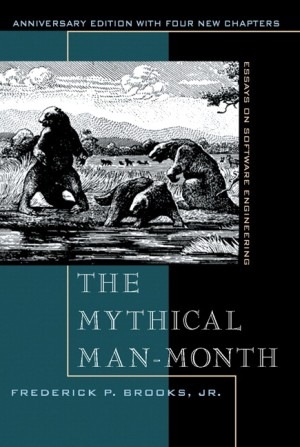
mmm Fred Brooks could have titled his famous book, “Nine Women Can’t Have a Baby in a Month”, instead of the Mythical Man Month.  As much as we may be tempted to correct the zealousness of software engineers, product managers and marketers, there is this thing called a critical path whereby adding more people to a project won’t make it go any faster.  I guess there are only so many seats on that bus.

From my Canadian Friends

“The dead moose on the table.” I’ve only heard this expression in Canada.  Here in Ohio, and I think in the rest of the world, the equivalent expression for an “awkward meeting topic” is “Elephant in the room”.   I’m curious why the Canadians felt the need to localize this expression.  Just like Canada, we don’t have elephants in Ohio, but that didn’t compel us to localize this expression to “The flattened deer on the side of the road” just to work in an indigenous animal.

“Bob’s Your Uncle” is an expression I heard used as a concluding remark after a passionate speech.  My first thought was “But I don’t have an uncle named Bob.”  I didn’t admit at the time that I had no clue what this meant, so after the meeting, I looked it up and learned that this expression is used in all the commonwealth countries.  It seems the more common equivalent is “I rest my case”.

Random

I learned “I turn in to a pumpkin in one hour” from my former colleague George Florentine.  It is a great way to tell your colleagues that they better finish their business with you in one hour because you aren’t hanging around even if they have more to discuss or say.

“I am cornfused” is an expression I recall from a high-school coach and teacher.  Most people just think you’re illiterate and cannot pronounce the word “confused”.

“Ping me” is another common expression that means contact me via any means possible – email, txting, mobile, or yelling out the window.  It has its roots both as a network test between two computers and in sonar detection in naval warfare.

Just sayin” seems to get lots of use lately.  Add this to the end of all your highly offensive or insulting remarks to take the edge off.

Feel free to share any of your favorites that I’ve missed.  SFW only please!

Who’s Driving the Bus?

By Bill Forquer and Stefanie Lightman

Co-authored with Stefanie Lightman.  Stefanie is co-founder of iFridge & Company and consults on strategic positioning.  Bill and Stefanie both have years of experience driving and riding in the bus.

Effective teams get things done. The science and skill of running effective teams is hugely important in business.  Effective team leaders run effective teams.  The team leader gets everyone involved, leverages their talents, maintains focus on the goal, manages the schedule and assignments, and is the person you should thank the most if you receive a bonus when the goal is reached.  We think such an important role deserves a stylish and metaphoric name. “Team Leader”?  “Project Manager”?  Too lame!

Commonly, we hear sports metaphors like “quarterback” or “point guard” to describe the team leader role.  In Canada, you hear “stick-handler”. And it is certainly hard to imagine a football team scoring touchdowns without a quarterback, or a basketball team executing plays without a “point guard”, or a hockey team scoring goals without a stick-handler.

The Bus Driver

We both like the term “bus driver” the best.  There is a sense of urgency about a bus going down the highway without a driver!  A bus driver is a highly responsible position.  A bus and its passengers can perish instantly.  Bus drivers can be male or female; tall or short; creative or analytical.  The only physical characteristics required are the ability to see and quick reaction time.

There is also the sense of journey with a bus, just like the mission of a team.  Everyone is traveling together and hopefully focused on that common mission.  Everyone is heading in the same direction.  Everyone relies on the bus driver to get them safely to the destination – on time and within budget.  The bus driver must continuously monitor the direction, watch for detours, and make either minor or major course corrections.

Deciding the Route

NoWhereInParticularBus Often guided by a well articulated company vision and strategy, the bus driver now must choose the route.  The bus driver should empower passengers to make the journey as effective as possible.  The bus driver is usually the first to see upcoming roadblocks that can impact success, but roadblocks might also be seen first by passengers, if they’re paying attention.   Would your bus driver call an impromptu meeting when the “Check Engine” warning light comes on, or just ignore it?  Running an effective team or driving a bus – all the analogies work.

Driving or Riding … Not Both

Another downside of the sports metaphors is that some people believe it is perfectly acceptable to have two quarterbacks, two point-guards, or two stick-handlers on a team.  While sometimes that is the case in sports, and good succession planning requires a backup, a bus can uniquely have one driver.  Riders in the bus can advise, point, shout, jump out the window, and maybe even pull an emergency brake, but cannot drive. Bad things happen when more than one person attempts to drive a bus.

Sometimes however, a bus driver change is required.  The most successful way to handle this is to determine that this change should happen early.  Recognizing who in your organization can drive the bus and realizing when someone may not be suited for that role, is important to a positive outcome.

So next time you’re planning a journey by putting together a team of folks, do yourself a favor and tell everyone they are in a bus, where they are going, the role they have while in the bus, and by all means, make sure you have a driver.  If not, be sure to stop, as we’ve each done a few times in our careers, and shout out loudly, ‘Who’s Driving This Bus?’